Places · 8 min read
Melides vs Comporta: Curated Versus Grown
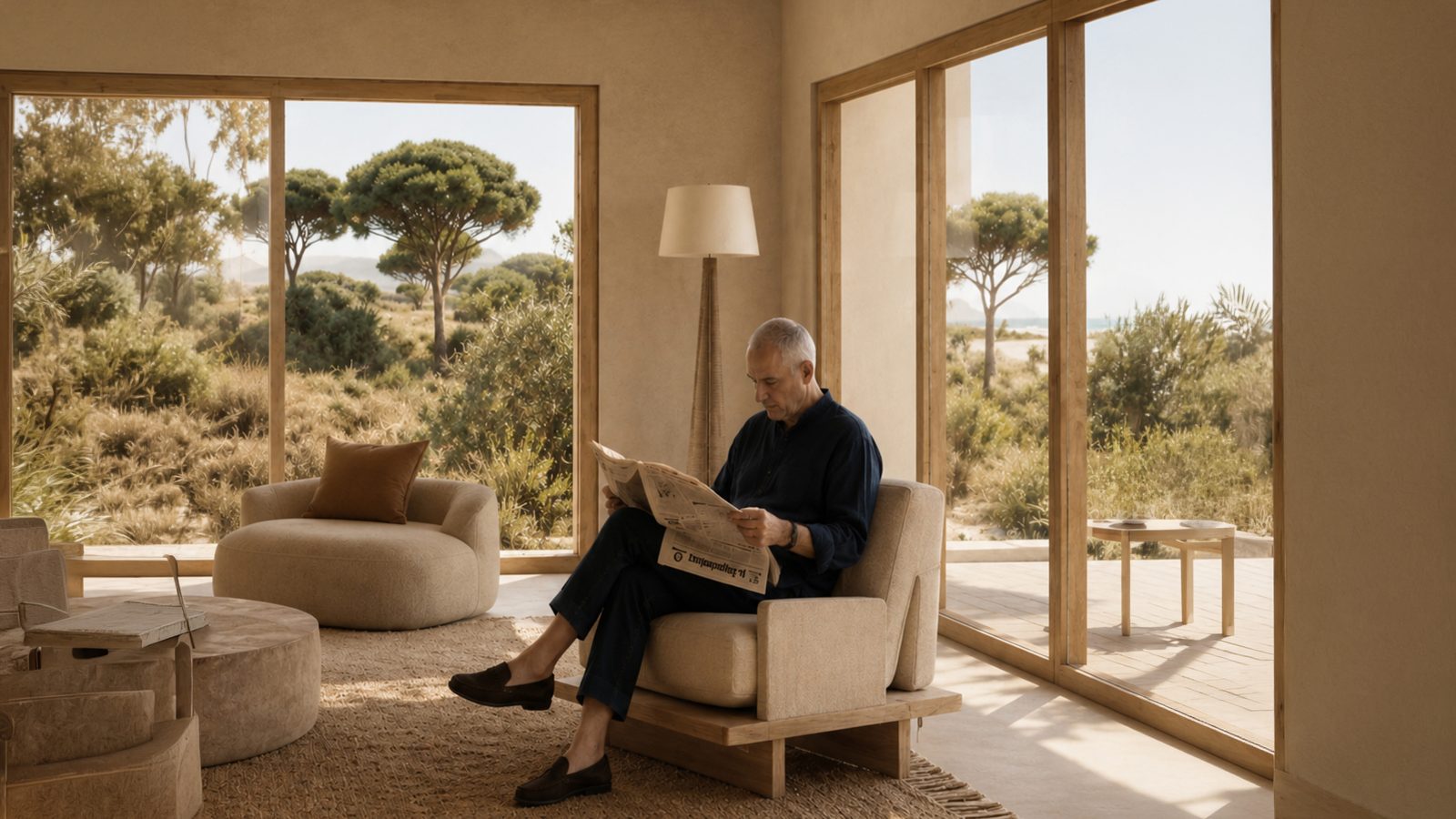
Melides and Comporta sit twenty minutes apart on the same Atlantic coastline south of Lisbon, and are constantly described as stages of one story — Comporta the discovered, Melides the next. The truth is more interesting: Comporta is the product of a single estate managed like a brand; Melides is a centuries-old parish governed by public law. One was curated. The other grew.
Introduction
"Melides is the new Comporta" may be the most repeated sentence in European coastal property writing. This article exists to retire it. Not because Melides isn't ascendant — it is — but because the phrase misreads both places at the level that matters to anyone deciding between them: the structure of who owns the land, who writes the rules, and what can therefore happen next.
What follows compares the two across their origins, their governance, their atmospheres, their architecture and their markets — and ends with the only comparison table on the internet we believe actually settles the question of which is for whom.
In this article
- Why "Melides is the new Comporta" misreads both places.
- Two origin stories: a single estate managed like a brand versus a centuries-old parish under public law.
- The administrative detail everyone misses — and why the municipality matters to buyers.
- How the two markets differ: managed scarcity versus legislated scarcity.
- A settled comparison table, and an honest answer to "which one, for whom".
Two origin stories, two operating systems
Comporta is an estate. Its modern identity descends from the Herdade da Comporta, a vast property of rice paddies, pine forest and seven villages — Comporta, Torre, Brejos, Pego, Carvalhal, Possanco and Carrasqueira — formally constituted in 1836. In the 1950s it passed to the Espírito Santo family, then Portugal's foremost banking dynasty *(acquisition year to be verified before publication)*, who did something historically unusual with it: nothing. For half a century the family kept the estate agricultural and its guest list private, making emptiness itself the estate's signature. When the family's bank collapsed in 2014, the property entered years of legal untangling; since 2019, control has rested with interests led by Paula Amorim *(sources: Comporta — Wikipedia; Surface Magazine)*. Comporta's celebrated restraint, in other words, has always been policy — family policy first, brand policy now. Its future is whatever its concentrated ownership decides, within the limits public law sets.
Melides is a parish. No single estate stands behind its landscape. It is a *freguesia* of the municipality of Grândola documented since the late fifteenth century, its land divided among many owners, farmed for rice and cork, and governed not by an estate office but by the public planning stack described in our Melides guide: the municipal PDM, the regional PROT, the 2022 coastal programme's 500 m no-build strip, Natura 2000 habitat law *(sources: DGTerritório; APA)*. Nobody curates Melides. It is grown, and the law now guarantees the growth stays slow.
This is the deep difference from which every visible difference follows — and it is why the "new Comporta" framing fails. Melides cannot become Comporta: it lacks the single owner that a Comporta requires.
The detail everyone misses: the municipalities
Comporta village belongs to the municipality of Alcácer do Sal. But much of what visitors mean by "Comporta" — Carvalhal, Pego beach, the estate's southern reaches — lies in Grândola, the same municipality as Melides. Planning rules, municipal taxes and licensing all run through the municipality, so a buyer comparing "Comporta" and Melides is often comparing two positions inside the same Grândola planning regime — a regime whose current PDM revision explicitly reduces the scope for tourism development. The municipal layer is covered in depth in Grândola: The Municipality Behind the Coast.
Atmosphere: a season versus a calendar
Comporta has acquired the infrastructure of a discreet resort: beach clubs at Pego and Carvalhal, a dense ring of restaurants and boutiques, and a social season that peaks hard in August. By any Mediterranean comparison it remains astonishingly low-key — no marina, no waterfront strip — but there is a scene, and for many of its regulars the scene is the destination.
Melides keeps agricultural time. Its landmarks are a lagoon, a mostly empty beach, a village square, and a handful of quiet institutions — Christian Louboutin's thirteen-room Vermelho (2023), the Aires Mateus-designed Pa.te.os guesthouses. Even in August, the rhythm is set by the rice and the light rather than by bookings. People who choose Melides tend to name what it lacks as its principal amenity — a preference examined properly in On Silence as an Amenity.
Neither reading is superior. They are different instruments, and honest advice starts by asking which one the buyer actually plays.
Architecture: a style versus a laboratory
Comporta codified an aesthetic — the whitewashed *cabana*, thatch, weathered timber — so successfully that it hardened into a template, reproduced across developments and rental villas coast-wide. The style is charming and was once radical; it is now a constraint, and serious architecture inside it must work by subversion.
Melides, arriving later and unencumbered, became the laboratory. Vincent Van Duysen's Casa M — low, horseshoe-shaped, poured concrete, his "warm brutalism" — could not have been built inside the Comporta vocabulary; nor could the excavated courtyards of Pa.te.os. The area's small body of contemporary work responds to the *montado* and the lagoon rather than to a house style — the fuller story is in The Architecture of the Alentejo Coast and Warm Minimalism, and the distinction it illustrates — reasoning from site versus reasoning from template — is precisely what separates an architect-designed home from a speculative villa.
The markets: two versions of enforced scarcity
Both markets are small, discreet and supply-capped — but differently, and the difference matters more than any price gap.
Comporta's scarcity is managed. Its pipeline contains a small number of large, branded projects — CostaTerra (Discovery Land Company) between Comporta and Melides; the Van Duysen-designed Club Comporta announced for 2028 *(source: The Architect's Newspaper)* — advancing at the pace concentrated ownership chooses, inside public-law limits. Managed scarcity delivers services, brand value and comparables; it also means future phases are a business decision someone else controls.
Melides' scarcity is legislated. Dispersed ownership means no pipeline manager; the five-layer planning stack means barely any pipeline at all. What exists inside the regime is, in effect, grandfathered. Legislated scarcity delivers permanence but not services: fewer transactions, fewer comparables, less published data.
We publish no €/m² figures for either area: circulating numbers derive from agency estimates, not a public index, and vary too widely to print. A sourced market overview, updated twice yearly, is maintained separately: The Comporta–Melides Market; the regulatory mechanics are set out in Why Building on the Alentejo Coast Is So Restricted.
The comparison, settled
| Dimension | Comporta | Melides | |---|---|---| | Origin | Estate constituted 1836; identity shaped by single ownership | Parish documented since the late 1400s; dispersed ownership | | Modern authorship | Espírito Santo family (1950s–2014), Amorim-led interests since 2019 | No single author; public planning law | | Municipality | Village in Alcácer do Sal; much of the area in Grândola | Grândola | | Governing logic | Curated — brand decisions inside public limits | Grown — public law only | | Atmosphere | Discreet resort; pronounced August season | Working village; agricultural calendar | | Infrastructure | Beach clubs, restaurant density, boutiques | Village square, cafés; Comporta's services 15–20 min north | | Architecture | Codified cabana vernacular; templates dominate | Small, experimental contemporary corpus (Casa M, Pa.te.os) | | Supply mechanism | Managed pipeline (CostaTerra, Club Comporta 2028) | Legislated near-absence of pipeline | | Market data | More transactions, more comparables | Thin; agency estimates only | | Best suited to | Buyers wanting services, season and resale liquidity | Buyers wanting landscape, silence and permanence | | Shared condition | Same coastline, same light, same 500 m no-build strip, same structural scarcity | — |
*Sources for factual rows: Wikipedia (estate history), DGTerritório (planning), Archpaper (pipeline). Table to be reviewed annually.*
So which one — and for whom?
Choose Comporta if proximity to restaurants, clubs and a social season matters, and if an established resale market with visible comparables is a requirement.
Choose Melides if the priorities are landscape, silence, architectural freedom and a village that still functions in November — and if a thinner service layer and a less documented market are acceptable costs of permanence.
In practice many owners use both; the coast is continuous, and the twenty minutes between them behave less like a border than a change of key. Those weighing an actual purchase should continue with the buying process and how to evaluate a development in a protected landscape.
Conclusion
Comporta shows what one owner with taste and patience can make of a coastline. Melides shows what a coastline makes of itself when agriculture persists and the law arrives early. Both futures are constrained — one by brand stewardship, one by statute — which is why this remains the rare corner of coastal Europe where today's landscape is a reliable picture of tomorrow's.
Between the two, in the municipality of Grândola, Apaulinha takes the grown path rather than the curated one: nine architect-designed homes on twelve hectares, conceived as a permanent ensemble within the landscape this article describes. Discover the houses on the grown coast →
---
Key takeaways
- Comporta descends from one estate (constituted 1836, Espírito Santo era, Amorim-led since 2019); Melides is a parish of many owners under public planning law.
- One was curated; the other grew — and that difference predicts their futures.
- Much of "Comporta" (Carvalhal, Pego, Tróia) is administratively Grândola; Comporta village is Alcácer do Sal.
- Comporta's scarcity is managed by its owner; Melides's is legislated — permanent but service-thin.
- Comporta suits buyers wanting services, season and liquidity; Melides suits landscape, silence and permanence.
- Melides structurally cannot become Comporta: it lacks the single owner a Comporta requires.
---
FAQ
How far apart are Melides and Comporta? About 25 km — roughly 20 minutes by car along the coast road through Carvalhal *(distance to be confirmed)*.
Is Melides really "the new Comporta"? No — the phrase misleads. Comporta's identity comes from a single estate managed like a brand; Melides is a centuries-old parish under public planning law. Melides structurally cannot follow Comporta's trajectory.
Who owns Comporta? The historic Herdade da Comporta was held by the Espírito Santo family from the 1950s until the aftermath of their bank's 2014 collapse; since 2019 control has rested with interests led by Paula Amorim.
Which municipality is each in? Melides and Carvalhal are in Grândola; Comporta village is in Alcácer do Sal. Much of the area popularly called "Comporta" is actually within Grândola.
Which has better beaches? The coastline is essentially continuous. Comporta's beaches (Pego, Carvalhal) carry more infrastructure; Melides' beach carries almost none, and fewer people.
Is property cheaper in Melides than Comporta? Comporta is generally the more established and more expensive market, but reliable public price data for Melides is limited; agency figures vary widely and should be verified case by case.
Can new large developments still be built in either? Only within tight limits: the 2022 coastal programme prohibits new building in the 500 m strip outside existing perimeters, the regional plan caps tourist beds, and Grândola's PDM revision reduces tourism parameters. Existing approved projects (CostaTerra, Club Comporta) largely predate this tightening.
Which is better for year-round living? Melides retains more permanent village life — school, pharmacy, daily commerce — with the town of Grândola 20 minutes away. Comporta is quieter in residential terms out of season.
Where do the designers actually live? Mostly around Melides: Christian Louboutin (whose hotel Vermelho opened there in 2023) and Vincent Van Duysen (Casa M) are the best-documented examples.
---
Related reading
- Melides: The Complete Guide — the fuller portrait of the parish this comparison introduces.
- Grândola vs the Algarve — the same comparative method applied at regional scale.
- Why Building Is So Restricted — the legal stack that produces "legislated scarcity".
- The Territory — the five-scale frame that makes both places one story.
- The Architecture of the Alentejo Coast — the style versus the laboratory, building by building.
Continue exploring
↓ Alentejo
↓ Grândola
---