Places · 13 min read
Melides: An Anatomy of the Last Quiet Coast
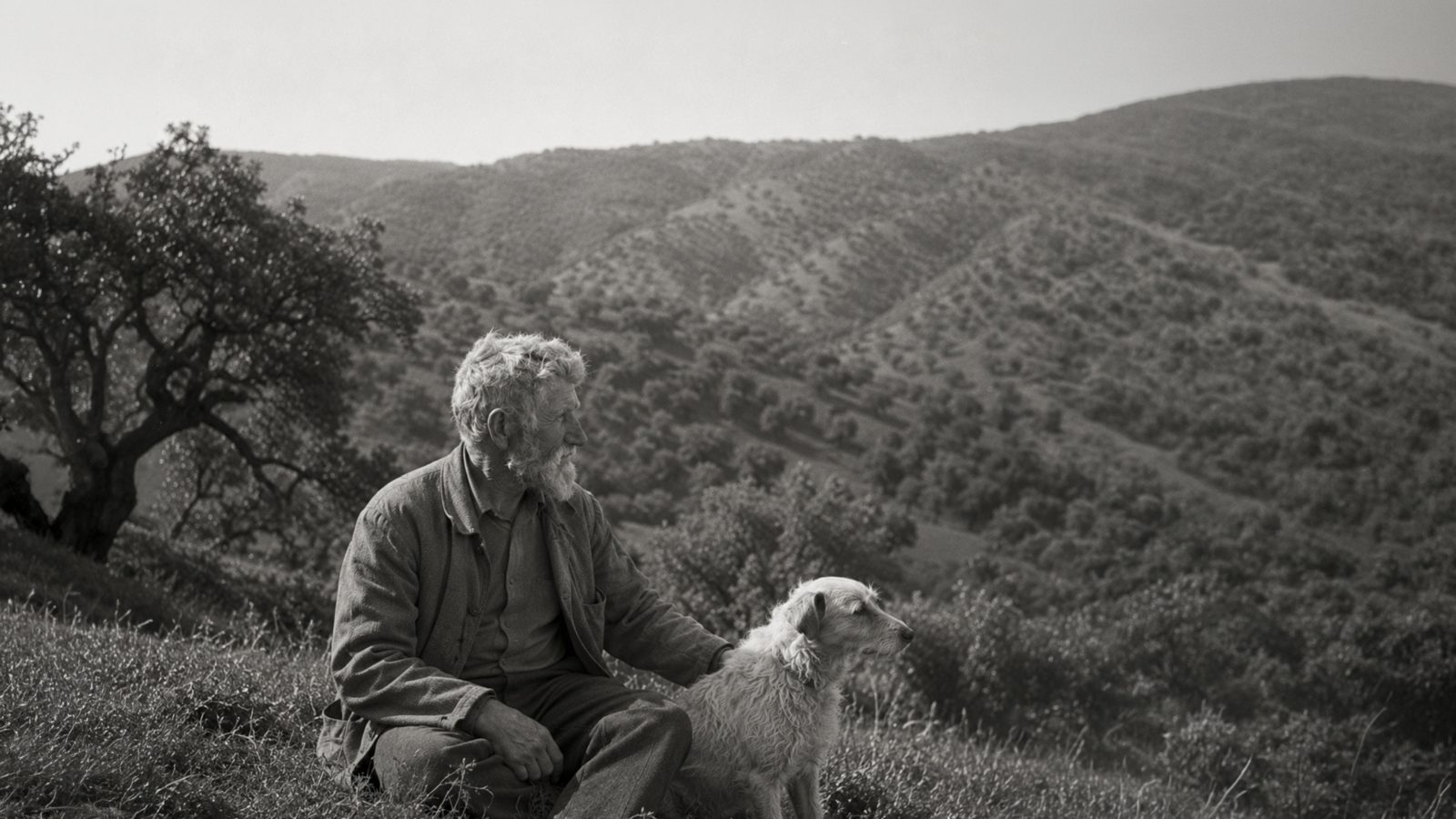
Melides is a village on Portugal's Alentejo coast, in the municipality of Grândola, about 130 km south of Lisbon. It sits behind a sequence of dune, lagoon, rice field and cork forest that has barely changed in a century — and behind at least five layers of planning and environmental law that make significant development close to impossible. That combination, not fashion, is the subject of this guide.
Introduction: why this village, of all villages
Every few years, European property writing anoints a "next" place. Melides received the title around 2020, when it became known that Christian Louboutin was opening a hotel there and that Vincent Van Duysen had built himself a concrete house among its umbrella pines. The anointment misses what is actually interesting. Villages do not become significant because designers arrive; designers arrive because something in the structure of a place — its land, its law, its light — makes it worth their while.
This guide reads Melides in that order. First the landscape, because everything else is a response to it. Then the planning regime, because on this coast the law is the landscape's guarantor. Then the architecture, because it is the most articulate response to both. And only then the life, which is what remains when the first three are in balance.
In this article
- Why Melides's four-band landscape — dune, lagoon, rice, montado — explains everything built and unbuilt here.
- The five layers of law that make significant development close to impossible.
- How Casa M, Pa.te.os and Vermelho read as three answers to one landscape.
- Why the silence has legal causes — and what that means for its durability.
- The village's two tempos, and why buyers should experience both.
I. The landscape: a machine in four parts
The territory of Melides is best understood as a working system, read from the ocean inland.
The dune belt. The beach — Praia de Melides — runs essentially unbroken for kilometres in each direction, part of the longest continuous sand system of the Portuguese coast, stretching from the Tróia peninsula toward Sines. Behind the foreshore rises a primary dune ridge stabilised by marram grass and, behind it, older forested dunes under umbrella pine. Dunes are not scenery; they are infrastructure. They absorb winter storm energy and shelter everything inland, which is why the law treats them as untouchable (of which more below).
The lagoon. The Lagoa de Melides collects the small watershed behind the coast and meets the sea through a channel that is opened seasonally — a managed ritual, timed to protect both the rice cycle and the lagoon's function as a nursery for fish and a station for migratory birds. A few kilometres south lies the far larger Lagoa de Santo André, at roughly 500 hectares the largest lagoon of the Alentejo coast and the core of a national nature reserve *(source: ICNF)*.
The rice plain. Between lagoon and village, the floodplain is planted with rice — flooded in late spring, harvested in early autumn. Rice is the region's calendar and its most honest landscape architect: it keeps the plain open, wet and unbuildable, and it explains the particular horizontality of the view from the village ridge.
The montado. Inland, the cork oak savanna of the Alentejo begins. Portugal produces roughly half the world's cork *(mark for verification: APCOR industry data)*, and the cork oak is protected by national law — felling one requires state authorisation, and has since long before this coast was fashionable. A landscape whose dominant tree cannot legally be removed is a landscape with a guaranteed ceiling on change.
Read together, the four parts explain something estate agents rarely articulate: around Melides, the most valuable land is valuable precisely because almost none of it can be built on.
II. Deep time: a short history of a slow place
Occupation here is old. The Dolmen of Pedra Branca, a megalithic tomb in the parish, dates to around 2500 BCE. The village proper is usually traced to the late fifteenth century, when a parish was established at the church of Santa Marinha; it grew as villages of its kind did, by the slow accretion of farming and fishing households. After a spell under Santiago do Cacém, it has belonged to the municipality of Grândola since 1895 *(source: Melides — Wikipedia; to be re-verified against Câmara de Grândola parish records before publication)*.
The twentieth century added little and subtracted little. While the Algarve industrialised its coastline for tourism from the 1960s onward, this stretch stayed agricultural — partly through remoteness, partly because its largest neighbouring landholding, the vast Herdade da Comporta to the north, was kept deliberately undeveloped by its owners. Melides entered the twenty-first century with its landscape intact at exactly the moment intact landscapes became the scarcest asset on the European coast. Its recent history — the arrivals, the hotel, the attention — belongs to Section IV. The point of the long view is simpler: nothing about Melides is new except the noticing.
III. The architecture of scarcity: five layers of law
The most consequential facts about Melides are legal ones. This is what most coverage of "the new Comporta" leaves out, and it is the section most worth keeping.
Development around Melides is constrained by at least five overlapping instruments:
| Layer | Instrument | What it does | Authority | |---|---|---|---| | Coastline | POC Espichel-Odeceixe (RCM 87-A/2022) | In the 500 m coastal strip, prohibits new building outside existing urban perimeters and already-approved tourist developments | APA / Council of Ministers *(source)* | | Region | PROT Alentejo | Caps tourism intensity — on the Alentejo coast, a maximum on the order of one tourist bed per resident | CCDR Alentejo *(source)* | | Municipality | PDM de Grândola (revision underway) | Sets land classification and building parameters; the current revision moves tourism parameters *downward*, citing landscape and natural values | Câmara de Grândola / DGT *(source)* | | Habitat | Natura 2000 — Sítio Comporta/Galé (RCM 142/97) + Reserva Natural das Lagoas de Santo André e da Sancha | EU-level habitat protection across the dune and lagoon systems; a national nature reserve immediately south | ICNF *(source)* | | Tree by tree | Cork oak protection law | Individual cork and holm oaks cannot be felled without state authorisation | ICNF *(cite Decreto-Lei 169/2001 — verify current consolidated version)* |
Two consequences deserve spelling out.
First: scarcity here is stacked, not single. A developer who clears the municipal plan still faces the regional bed-ratio cap; one who clears both still cannot touch the 500 m strip; and whatever remains is filtered through habitat law and, literally, tree by tree. Each layer answers to a different authority, which means no single negotiation can unlock the coast. This is the structural difference between the Alentejo litoral and almost every other fashionable coastline in Europe, where protection typically hangs on one instrument that one political cycle can amend.
Second: what exists already is, in effect, grandfathered rarity. The handful of permitted projects between Comporta and Melides — the developments and branded residences of this coast — were approved under rules that are tightening, not loosening. The supply pipeline is not slow; it is closing. For a buyer, this inverts the usual resort-market logic, where today's purchase competes with tomorrow's expansion phase. Here, the market's structure is set by law rather than by developer restraint — a distinction worth a whole article, and it has one: Why Building on the Alentejo Coast Is So Restricted.
A common misconception is worth retiring here: Melides is not "undiscovered", and its emptiness is not fragile innocence awaiting ruin. It is regulated emptiness. The correct anxiety for this coast is not overbuilding — the law largely forecloses it — but the slower pressures of traffic, seasonal load and beach access, which Portugal's authorities have themselves begun auditing.
IV. The architecture: responses, not statements
Architecture arrived in Melides the way it should: as a reaction to the landscape and the law, not as a brand exercise.
Casa M — Vincent Van Duysen. The Belgian architect's own house, low and horseshoe-shaped in poured concrete, sits among pines and does not photograph well from the road — deliberately. Van Duysen has resisted the word minimalism for it, preferring "warm brutalism": mass, shadow and rough material doing the work that ornament would do elsewhere. What makes Casa M important for this coast is what it demonstrates: that the alternative to the local thatch vernacular is not glass modernism but weight — architecture that behaves like landform *(background: Surface Magazine)*.
Pa.te.os — Manuel Aires Mateus. A set of guesthouses in the hills above the lagoon by one of Portugal's most internationally respected architects. Aires Mateus works in pure volumes and deep thresholds; here the buildings read as courtyards excavated from a single mass, oriented to frame the montado rather than the sea. The lesson: on this coast the view is horizontal and agricultural, and the best architecture treats it as such instead of chasing the ocean panorama.
Vermelho — Christian Louboutin. Thirteen rooms in the village itself, opened in 2023. It matters less as architecture than as a position: a hotel built *inside* the village fabric, at village scale, with Portuguese and Mediterranean crafts throughout — azulejos, embroidery, ironwork. It is the counter-model to the destination resort: hospitality as a member of the parish rather than a gated economy beside it. For a deeper reading of these three buildings and their predecessors, see The Architecture of the Alentejo Coast and Warm Minimalism.
What the three share — and what distinguishes them from a speculative villa — is that each begins from a constraint the law and landscape impose and turns it into the design's subject. That is also the difference, in general, between an architect-designed home and a speculative one: not budget, but the direction of reasoning.
V. Silence, darkness, distance: the scarce commodities
"Quiet" is the laziest word applied to Melides, so it is worth being precise about what the quiet consists of and why it now carries an economic premium.
Silence on a coastline is a supply problem. It requires the absence, within earshot, of the four sound sources that colonised the Mediterranean littoral over sixty years: coastal roads, beach concessions with amplified music, dense holiday lettings, and construction. Around Melides, the first is absent because the 500 m strip forbids the frontage road pattern; the second because concessions on this beach are few and small; the third because the bed-ratio cap and the PDM keep letting stock low; the fourth because — see Section III — there is structurally little to construct. The silence, in other words, is not an atmosphere. It is the audible form of the planning regime.
The same reasoning applies to darkness (little public lighting, no illuminated strip, hence an actual night sky) and to distance (the beach absorbs its August visitors because its length is measured in kilometres per concession, not metres). Each of these is routinely promised by resort marketing and structurally deliverable in very few places. A longer meditation on this — On Silence as an Amenity — belongs to the Living pillar; the practical point for a reader of this guide is that these qualities are properties of the territory's legal architecture, and therefore durable, rather than properties of its current fashion, and therefore fragile. That durability is also, not incidentally, the rational core of the resale argument for low-density places.
VI. The village as it is lived
Melides remains a working parish rather than a resort shell: a pharmacy, cafés on the square, a primary school, a market rhythm, and the town of Grândola — the municipal seat, with supermarkets, clinics and the region's administration — twenty minutes east. Lisbon and its airport are about 1h30 by the A2 *(distances to be confirmed against current routing)*. Comporta and Carvalhal, with the coast's concentration of restaurants and beach clubs, are 15–20 minutes north; the practical geography is covered in Melides vs Comporta and the municipal context in Grândola: The Municipality Behind the Coast.
The year has two tempos. June to September is the full village: the beach staffed, the square occupied, the lagoon channel open. October to May is the agricultural village: rice stubble, cork stacked for collection, Atlantic weather fronts, and a quality of emptiness that residents tend to describe as the point rather than the price. Buyers should experience both before deciding anything; A Year on This Coast describes the full cycle, and the practical guide to buying covers what follows the decision.
VII. What this means if you are considering the area
This guide has deliberately not quoted prices: figures circulating for Melides come from agency estimates rather than any public index, and vary too widely to print responsibly. What can be said structurally is this: demand for the qualities described above is broad and growing; the supply of places that can legally provide them is fixed by the five layers of Section III; and the few residential projects that exist inside this regime carry, in effect, the scarcity of the whole system in their permits. Evaluating any of them starts with the questions in How to Evaluate a Development in a Protected Landscape.
Conclusion
Melides is not a discovery and not a trend. It is the residual case: the stretch of European Atlantic coast where agriculture persisted, ownership stayed dispersed, and five layers of law arrived before mass development could. Its qualities — the four-band landscape, the working village, the silence with a legal foundation — are unusually legible once one reads them in the right order: landscape first, then law, then architecture, then life.
That reading is also the founding logic of Apaulinha, a collection of nine architect-designed homes on twelve hectares in Grândola, between Melides and Comporta — conceived from the same premise that on this coast, what the law protects, architecture should honour. See what these conditions build →
---
Key takeaways
- Melides is a working parish of Grândola, not a resort — its openness is administrative and agricultural.
- The landscape is a four-part system (dune, lagoon, rice plain, montado) in which almost nothing can legally be built.
- At least five overlapping instruments — coastal strip, regional cap, PDM, habitat law, cork-oak law — cap development, each under a different authority.
- The designers' arrival (Louboutin, Van Duysen, Aires Mateus) followed the structure; it did not create it.
- Silence, darkness and distance here are properties of planning law, not moods of the season.
- Supply is not slow — it is closing; existing licences are, in effect, grandfathered rarity.
- Visit in August and in February: the village has two tempos and both are the point.
---
FAQ
Where is Melides, Portugal? On the Alentejo coast, in the municipality of Grândola (district of Setúbal), about 130 km south of Lisbon — roughly 1h30 by car.
Why is Melides suddenly well known? Attention followed the arrival of figures from design and architecture — Christian Louboutin opened the hotel Vermelho there in 2023; Vincent Van Duysen built his own house nearby. The underlying cause is structural: an intact coastal landscape within reach of Lisbon.
Is Melides the same as Comporta? No. They are neighbouring areas about 20 minutes apart, with different histories and different ownership structures. See our comparison: Melides vs Comporta.
Can you build near the beach at Melides? Within the 500 m coastal strip, new building outside existing urban perimeters is prohibited under the POC Espichel-Odeceixe (2022). Further inland, municipal and regional plans impose low density limits.
What protects the landscape around Melides? At least five overlapping instruments: the coastal programme (POC), the regional plan (PROT Alentejo), Grândola's municipal plan (PDM), Natura 2000 habitat protection (Sítio Comporta/Galé), and national cork oak protection law.
Does Melides have a beach? Yes — Praia de Melides, a long, wide, west-facing Atlantic beach backed by dunes, lifeguarded in season, adjoining the lagoon.
What is the Lagoa de Melides? A small coastal lagoon fed by the local watershed, opened seasonally to the sea; it supports rice cultivation and migratory birdlife. The much larger Lagoa de Santo André, core of a national nature reserve, lies just south.
Is Melides a good place to buy property? Structurally, supply is capped by law and demand for intact coastal landscape is broad; but the market is small and thinly documented. Understand the planning regime first — then see our buying guide.
When should I visit to judge it properly? Twice: once in high summer, once between November and March. The village has two tempos, and buyers should want both.
How far are Comporta's restaurants and beach clubs? 15–20 minutes north by road, around Carvalhal and Pego.
---
Related reading
- Melides vs Comporta — the comparison that settles the "new Comporta" question — curated versus grown.
- The Atlantic Coast of Grândola — Melides beach in its true context: one of ten on a single municipal shore.
- Why Building Is So Restricted — the full legal machinery behind this guide's Section III.
- Grândola: The Complete Guide — the municipality this parish belongs to — the operating system.
- On Silence as an Amenity — why the quiet described here is Europe's scarcest luxury.
Continue exploring
↓ Alentejo
↓ Grândola
↓ Melides
---
Sources & further reading
- APA — Programa da Orla Costeira Espichel-Odeceixe (RCM 87-A/2022)
- Turismo de Portugal — PROT Alentejo fiche
- DGTerritório/PCGT — PDM de Grândola
- ICNF — Reserva Natural das Lagoas de Santo André e da Sancha
- Melides — Wikipedia (secondary; re-verify against municipal records)
- Surface Magazine — the coast's architecture