Market · 8 min read
Investing in Melides: Portugal's Most Protected Luxury Coast
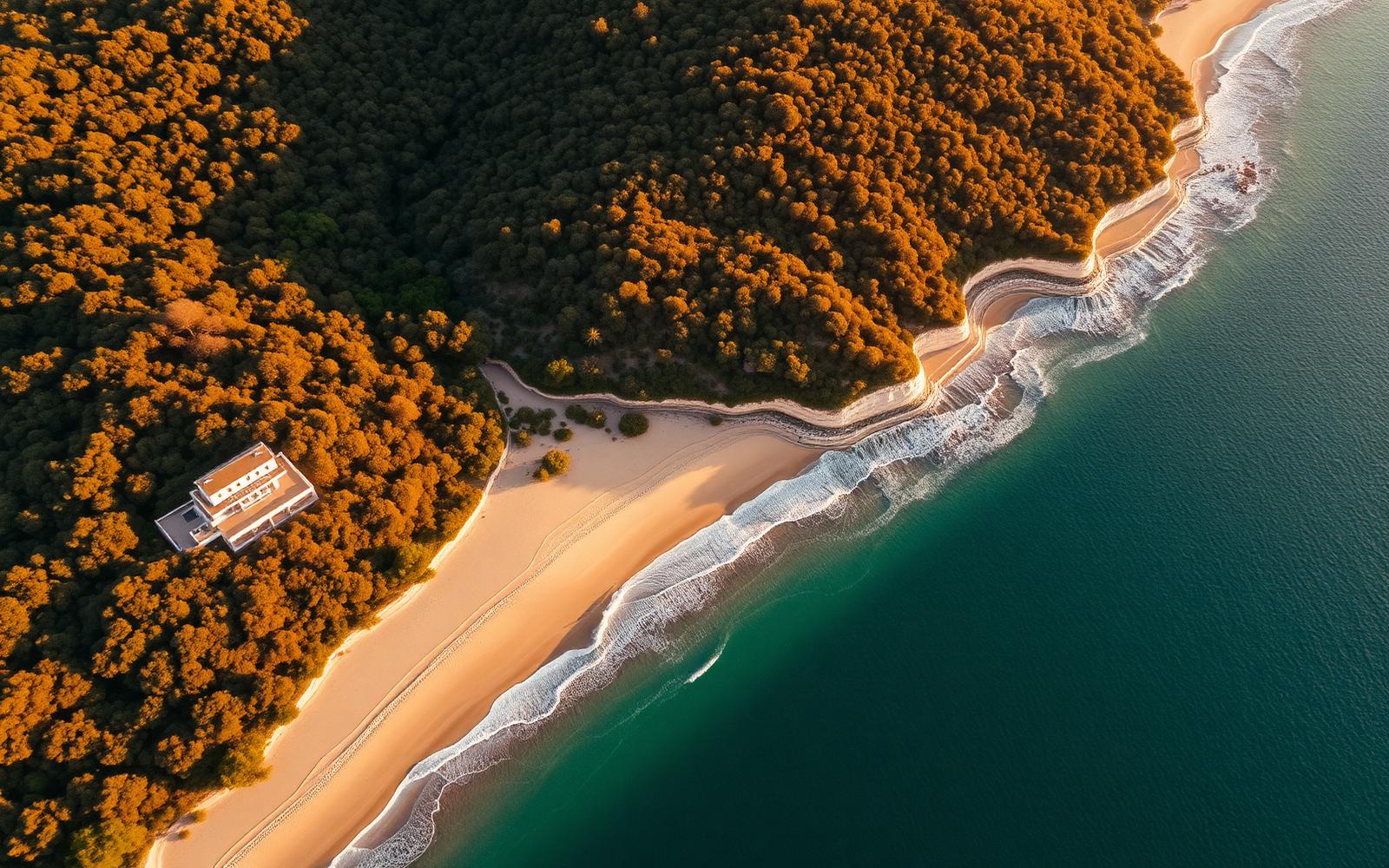
Melides, on Portugal's Alentejo coast, has become one of Europe's most closely watched real estate markets — not because supply is expanding, but because it structurally cannot. This guide reads the Melides property market the way a serious buyer should: through land, law and scarcity first, and price second.
Why Melides, and why now
Melides is a village in the municipality of Grândola, about 130 km south of Lisbon and 20 minutes from Comporta. Over the last five years it has moved from an agricultural parish that most Portuguese buyers had never considered to a destination named alongside Ibiza, Formentera and the Cap Ferret as a "quiet luxury" coast.
The trigger was visible: Christian Louboutin's hotel Vermelho opened in 2023, Vincent Van Duysen built his own concrete house nearby, Manuel Aires Mateus completed the Pa.te.os guesthouses in the hills. The underlying cause is structural — a two-hour drive from a European capital city, an Atlantic beach measured in kilometres, and a legal regime that keeps almost all of it unbuildable.
For an investor, that combination is the point. Fashionable coastlines usually price in a wave of new supply that hasn't been built yet. Melides prices in the opposite: the near-certainty that supply is closing.
The market in numbers
Melides real estate has no public price index, but three orders of magnitude are worth naming.
- New architectural villas on the coast between Comporta and Melides trade in the €2M–€8M range, with landmark projects reaching well beyond.
- Serviced land plots inside the few permitted development perimeters typically sit at €400K–€1.5M depending on view, ceiling and access to the coastal strip.
- Traditional village houses in Melides itself, when they change hands (which is rarely), have moved from roughly €300K a decade ago to €800K–€1.5M today for a small restored footprint.
Compared with the Algarve's mature resort market or Comporta's earlier speculative peak, Melides is still narrow and thinly documented. That is characteristic of markets governed by scarcity rather than by developer supply.
Why the supply is capped by law
Any credible investment thesis for Melides starts with the planning regime. Five overlapping instruments cap what can be built here — each answering to a different authority, so no single negotiation can unlock the coast.
1. POC Espichel–Odeceixe (2022) — inside the 500 m coastal strip, new building outside existing urban perimeters is prohibited. 2. PROT Alentejo — the regional plan caps tourism intensity on the Alentejo coast at roughly one tourist bed per resident. 3. PDM de Grândola — the municipal master plan classifies every parcel and is currently being revised *downward* for tourism parameters. 4. Natura 2000 — Sítio Comporta/Galé and the Reserva Natural das Lagoas de Santo André e da Sancha — EU and national habitat protection over the dune, lagoon and pine systems. 5. Cork-oak protection law — individual cork and holm oaks cannot be felled without state authorisation.
The full mechanics are covered in our dedicated guide to Alentejo coast building restrictions, and Grândola's master plan itself in The Grândola PDM, Explained.
For an investor, the practical consequence is that the existing licensed projects on this coast carry, in effect, the rarity of the whole system in their permits. They are not competing with a future supply pipeline — the pipeline is what has already been approved.
What actually appreciates on this coast
Not every property in Melides captures the scarcity premium equally. Three qualities separate assets that hold value from those that only ride the current cycle.
- A defensible position within a protected regime. A licensed home inside a low-density masterplan is structurally different from an off-plan promise on land that still needs to clear PDM, Natura 2000 and coastal-strip review. Ask for the *alvará* and the actual planning classification, not the marketing brochure.
- Architecture that reads as landscape. The homes that have appreciated on this coast — Casa M, Pa.te.os, the best of the Comporta villas — belong to the terrain rather than sit on it. "Architect-designed" here means the reasoning starts from land, light and cork oaks, not from a floor plan template. Our note on architect-designed vs speculative homes walks through the distinction.
- The right silence. Silence, darkness and distance are properties of the planning law here, and therefore durable. Assets that sit behind the 500 m strip, away from through-roads and beach concessions, capture that durability. Assets that don't will re-rate first when the region's traffic and seasonal load rise, as Portugal's own coastal authorities have begun documenting.
Buying as a non-resident: the short version
Portugal is open to foreign buyers. The process is the same for residents and non-residents, and the mechanics — NIF, due diligence, promissory contract (CPCV), final deed — are covered in our buying-property-in-Portugal guide for non-residents.
Three points matter specifically for Melides:
- Legal due diligence outranks agent narrative. Confirm the PDM classification, the coastal-strip status, any Natura 2000 overlay and — for rural parcels — the REN/RAN classification described in our protected-land guide. A parcel inside REN is not, by default, buildable.
- Golden Visa no longer applies to real estate. Since October 2023, direct residential property purchase no longer qualifies for Portugal's residency-by-investment scheme. Investment-linked residency now runs through qualifying funds. Buyers whose original thesis was residency-by-property should recalibrate.
- Ongoing costs are modest but real. IMI (municipal property tax), IMT (transfer tax) and, for higher-value homes, AIMI apply. A local fiscal representative simplifies annual filings for non-residents.
Melides vs Comporta vs the Algarve
Two comparisons come up repeatedly, and both matter for a Melides investment thesis.
- Melides vs Comporta. Twenty minutes apart, fundamentally different. Comporta grew inside a single historical estate managed like a brand; Melides grew as an ordinary parish under public law. Our Melides vs Comporta guide reads them side by side. For an investor, the distinction shows up in title structure, letting rules and how new supply is authorised.
- Grândola vs the Algarve. Portugal built two Atlantic coasts in the twentieth century — one for volume, one for landscape. The full history is in Grândola vs the Algarve. The relevance to Melides is that the Alentejo coast has never allowed the Algarve's density model, so its price curve responds to different drivers.
Where Apaulinha fits
Apaulinha is a collection of nine architect-designed houses on twelve hectares in Grândola, between Melides and Comporta. It exists inside the regime this guide describes: a single licensed low-density plan, buildings designed to belong to the montado, and a landscape whose durability rests on the same five layers of law that cap the rest of this coast. It is one worked example of what these conditions build when the design reasoning starts from the land.
For a full reading of the territory around Apaulinha, see our complete guide to Melides and to the municipality of Grândola.
Key takeaways
- Melides real estate is priced by structural scarcity, not by a future supply pipeline.
- Five overlapping legal instruments cap development, each under a different authority — the supply is closing, not slowing.
- Landmark architecture (Van Duysen, Aires Mateus, Louboutin) followed the regime; it did not create it.
- Assets that hold value share three traits: a defensible planning position, architecture that reads as landscape, and durable silence.
- Foreign buyers face no special obstacles, but Golden Visa no longer applies to direct property purchase.
- The right comparison for a Melides property is not the Algarve or Comporta — it is the small set of European coasts where landscape is legally protected at five levels.